
He is Risen, Alleluia
Easter Sunday
Jesus’ Resurrection from the Dead – Christ is RISEN Alleluia

He is the Christ who triumphs over sin and death making possible our resurrection to eternal life.
‘I have risen, and I am with you still.’
Easter Sunday Entrance Antiphon
There is fuller Western and Eastern Church Communion in the Celebration of Easter
on April 20th this year 2025
“Easter is our 2,000-year-old Christian holy season celebrating the resurrection of Jesus Christ and marking the arrival of a new Springtime and for Christians it is THE most important observance of the year. Easter is also significantly associated with the exodus of the Jewish community from Egypt as depicted in the Old Testament and the Jewish celebration of Passover. The Last Supper, which took place the night before Jesus was arrested, is linked to these events.
Easter is celebrated by Christians in a number of ways, including the Baptismal Rite, the traditional liturgy observed by Catholics on the night of Holy Saturday, and the sunrise practices on Easter Sunday favoured by Protestant tradition. Easter is also celebrated zealously by members of the Eastern Orthodox church. The day on which they observe Easter usually differs by 13 days from our Catholic celebration since the Eastern Church follows the Julian solar calendar, but this year, 2025, both our calendars are perfectly aligned and so, in fuller communion, we will all celebrate Easter on April 20th this year 2025.
The 50 Days of Easter
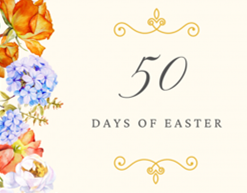
Our early Christian ancestors found great symbolic meaning in Easter’s 50day celebration, including the Feast of the Lord’s Ascension and the Feast of the Holy Spirit on Pentecost Sunday. 50 days is seven weeks, a week of weeks plus one day. That extra day was the Eighth Day, the same name they gave to Sunday, the Day of Resurrection, the day that symbolized eternity. It’s not just the start of a new seven-day week but the beginning of a whole new creation.
Fifty days is also just about one-seventh of the whole year, so these 50 days hold the same relationship to the year as Sunday does to the week. That’s why the 50 days of Easter are known as the Great Sunday of the entire year.
Easter, akin to Christmas, has an octave, and the eight days from Easter Sunday to Divine Mercy Sunday are celebrated as one great day, ‘The Sunday’ of the Easter season. In the early Church the newly baptized wore their white baptismal garments throughout this week, and after Christians rose to civic place and duty, this whole week became a legal holiday in many parts of the known world.
While 50 days of unmitigated joy seems hard for us today to sustain, the season has, profound meaning. It’s the time when we are called to experience anew what it means when we say Christ is risen. It’s the season when we remember and ponder the beginnings of our Church, the truth and reality of the gifts of the Spirit, the meaning and mission of discipleship, our discipleship, and on what our joining in the Eucharist commits us to be and do.
For no matter how glorious this 50-day ‘taste of the heavenly banquet’ is meant to be, God eventually calls us out of the celebration and reminds us to move on and live what we’ve celebrated in all the moments of our lives.
Easter Prayer
Draw Us Forth
Draw us forth, God of all creation.
Draw us forward,
away from limited certainty.
Draw us into the immense world
of Your love.
Give us the capacity to
even for a moment,
taste the richness
of the feast of Easter.
Give us peace
to live with uncertainty,
with questions,
and with doubts.
Draw us to experience
Jesus’ resurrection anew,
with open wonder,
and with increasing ability
to see Him
in the people of Easter.
Alleluia, Amen
Author Unknown
…..and the origin to those Easter Eggs we all enjoy on Easter morning…..

The Easter egg is believed to represent Jesus’ Resurrection and emergence from the tomb and became a symbol of the Resurrection. Just as Jesus rose from the tomb, the egg symbolises new life emerging from the eggshell. Decorating eggs for Easter is a tradition that dates back to at least the 13th century. One explanation for this custom is that eggs were formerly a forbidden food during the Lenten season, so people would paint and decorate them to mark the end of the period of penance and fasting, then eat them on Easter as a celebration. In the Orthodox tradition, eggs are painted red to symbolize the blood that Jesus shed on the cross. The egg-colouring tradition has continued to this day.
Enjoy!
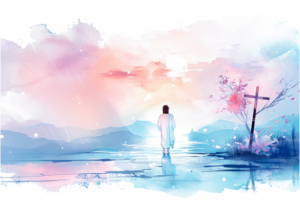
‘This day was made by the Lord; we rejoice and are glad’
Psalm 117

