
Our New Holy Pontiff
Pope Leo XIV
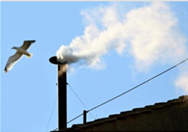
The white smoke signalling a new pope had been chosen.
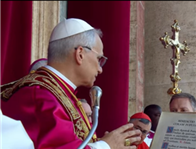
Conclave – a brief history
The procedures for the election of the pope have developed over two millennia. From the time of the Apostles until 1059, the Pope, like other bishops, was chosen by the consensus of the clergy and laity of the diocese. In 1059, the body of electors was more precisely defined, when the College of Cardinals was designated the sole body of electors. Since then, other details of the process have developed. Until the College of Cardinals was created in 1059, the bishops of Rome, like those in other areas previously, were elected ‘by acclamation’ of the local clergy and people. Procedures similar to the present system were introduced in 1274 when Gregory X when promulgated ‘Ubi Periculum’, following the severe action of the magistrates of the city of Viterbo (8o kilometres NE of Rome) where the Pope resided at that time.
During the interregnum of 1268–1271 ‘(the long 3 year delay in electing a new Pope) the local people and clergy had ‘taken things into their own hands’ to try to ‘speed up’ the election of a new Pontiff. To resolve the prolonged deadlock in the papal election, the local authorities resorted to the forced seclusion of the cardinal electors (as had first been done in the city of Rome in 1241, and possibly before that in Perugia in 1216). When this forced seclusion of the cardinals gathered in Viterbo failed to produce a Pope, the people and magistrates there refused to send in any food except bread and water. When even this failed to produce a result, the townspeople removed the roof of the Palazzo dei Papi (where the Cardinals had gathered to vote) in their attempt to speed up the election. This whole situation lasted for two years and eight months and was the longest conclave in history.
In 1274, in an attempt to avoid such lengthy delays in the future, the Pope who was elected after that almost 3 year ‘interregnum’, Pope Gregory X, introduced stringent rules, with the promulgation of ‘Ubi Reticulum’. Cardinals were to be secluded ‘cum clave’ (Latin for ‘with a key’), and not permitted to leave until a new pope had been elected. Food was supplied through a window to avoid outside contact. After three days of the conclave, the cardinals were to receive only one food dish a day. After another five days, they were to receive just bread and water, and during the conclave, no cardinal was to receive any ecclesiastical revenue.
This, together with the choosing in the 1500’s of The Sistine Chapel as the location of ‘Conclave’, is the foundation of the process of Papal Conclave elections, with obvious amendments to those original ‘punishing’ elements first implemented, and with some additional fine-tuning most recently made by Pope Pius XII, Pope St John XXIII, Pope St Paul VI, Pope St John-Paul II and Pope Benedict XVI.
~~~~~
Pope Leo XIV
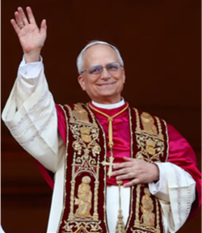
We welcome with prayerful hearts our new Holy Father Pope Leo XIV, who has been called by the Holy Spirit to shepherd us in our response to the love of our saviour Jesus Christ. We will all get to know the Holy Father and know more about him in time. He is the first North American Pope, a native of Chicago, his formation was in the tradition of the Augustinian Order, and he was appointed Cardinal by Pope Francis in 2023. He served as a missionary bishop in Peru for 20 years, and most recently has been Prefect of the Congregation of Bishops in the Holy See. The new Holy Father’s choice of papal name is very, very noteworthy, as his same-name predecessor, Pope Leo XIII ( the immediate Papal predecessor of our own Pope Pius X) was known as ‘The Social Pope’, ‘Pope of the Worker’, saw Social Justice as a vital mission of the Church, and had deep devotion to Our Lady and the power of her prayer with and for all Gods people. May the Holy Spirit guide, enlighten and protect Pope Leo XIV and may each of us be graced to pray for him.
Our Lady, Mother of the Church, pray for him. Amen

